

A lot happens at Ibec. From the events and VIP briefings we host with political and business leaders to our political engagements and campaigns we run on your behalf. Here we show some recent updates from our CEO, Danny McCoy.
CEO Update: Foundations for innovation, skills, and competitiveness; plus, new all-island labour market survey
Friday, 23 October
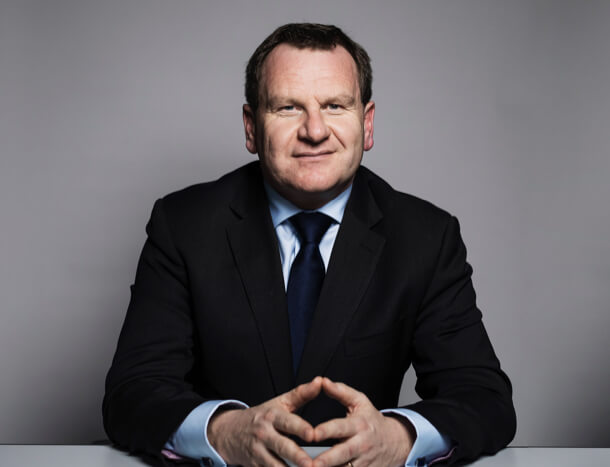
The latest CEO Update to Ibec membership from Danny McCoy
Last week, Ibec once again proudly supported the Royal Irish Academy's Hamilton Day 2026, an event commemorating Dubliner William Rowan Hamilton’s 1843 breakthrough in quaternion algebra. We were delighted to host a masterclass for the most gifted third level mathematics students in Ireland with Fields medallist James Maynard, followed by an awards ceremony.
Hamilton Day serves as an important reminder that science and innovation remain the bedrock of our modern knowledge economy. Our continued investment in these foundational skills today is essential to successfully navigating the ongoing AI transition and safeguarding Ireland's long-term competitiveness.
This was a core theme at last week’s International AI Summit at the RDS, a key event under Ireland’s Presidency of the Council of the European Union. Ibec had a strong presence at the event which offered an important platform to shape how we empower our workforce in a digital future. Speaking on the panel “The AI-Powered Workforce: Redefining Work, Skills and Opportunity”, Ibec President Maureen Walsh addressed how industry and government can more effectively collaborate, so that our labour markets become genuinely AI-native.
Also at the Summit, Technology Ireland Director Una Fitzpatrick spoke on “the Changing World of Work” panel, addressing how AI is transforming the modern workplace, and how Ireland can remain competitive during this transition. While measures such as unlocking €150 million from the National Training Fund in this month’s Budget are welcome to improve AI readiness, industry-led upskilling frameworks like Skillnets must receive continued support to make a resilient, AI-empowered labour market a reality.
These were amongst the points I raised at our HR Leadership Summit this week, where Ibec launched its latest Talent Trends Report, illustrating the key trends shaping workplaces across the country. Our findings show that most HR professionals do not expect AI to negatively affect headcount in 2027, though 36% have yet to formally model its overall impact on workforce structure. The feedback demonstrates genuine confidence that, while roles will evolve, the narrative of job displacement does not reflect what HR leaders are seeing on the ground. Instead, the primary challenge lies in understanding how to capture and measure the productivity benefits of AI across operations.
Another key finding to emerge from the report was the implementation of the EU Pay Transparency Directive, arguably the most significant piece of EU employment legislation in decades. 68% of HR leaders cited this work as the single most impactful factor affecting HR operations, as compliance deadlines approach. Being provided sufficient time to act has been a major concern over the past year and is why Ibec continues to support employer preparedness. We will be actively engaging with Government to seek greater certainty in the timelines for enactment and commencement of the legislation and related guidance.
Last week at the Tripartite Social Summit for Growth and Employment in Brussels, Chair of Ibec Anne Heraty and I called for the removal of obstacles within the EU Single Market, while stressing the importance of an open European economy and sustained investment in AI skills. Chaired by President of the European Council António Costa and President of the European Commission Ursula von der Leyen, with An Taoiseach Micheál Martin and Minister of State Alan Dillon TD representing the Council of the EU under the Irish Presidency, the Summit allowed us to deliver clear priorities at the highest level.
Scaling collaborative, industry-led frameworks across the Single Market will be essential to translate the high-level ambitions of the Draghi and Letta reports into tangible European competitiveness. Ibec colleagues Jackie King & Pat Ivory reinforced these core messages in a meeting with Commissioner Maroš Šefčovič yesterday at Iveagh House.
Finally, I am delighted to invite you to the launch of our major new All-Island Workforce Survey Report, developed in partnership with the Confederation of British Industry Northern Ireland and Hays in Dublin on 10 November in the Royal Irish Academy.
Drawing on insights from over 1,200 respondents from across the island, this major new report is the most comprehensive assessment of work trends across the all-island economy to date, exploring the opportunities and challenges of unlocking the island’s full economic and commercial potential. You can register for the event here. We hope to see you there.
Regards,
Danny McCoy
CEO, Ibec
Walk the Walk / with Reputation Inc
“Walk the Talk”, a new series from Reputation Inc featuring conversations with leaders in business and broader society, delving into the intersection between business and reputation.
The episode, featuring Ibec CEO Danny McCoy, is presented in in four bite-sized video clips, exploring a range of topics including strategy, reputation, leadership, sustainability, and culture.
